January 30, 2026
5 min read
We explore the growing debate between human leadership and artificial intelligence in decision-making. By comparing the strengths and limitations of CEOs and AI systems, the article reveals why the future doesn’t belong to one or the other, but to their collaboration. Discover how AI-augmented leadership is reshaping strategy, reducing risk, and enabling smarter, more responsible decisions in today’s data-driven world.
In boardrooms around the world, a quiet shift is happening. Decisions that were once made exclusively by CEOs, founders, and executive teams are now being supported—or sometimes challenged—by artificial intelligence. The question is no longer if AI should be involved in decision-making, but how much power it should have. Can AI outperform a CEO? Or is the best future one where both work together?
From an IT and AI company perspective, the answer is clear: it’s not a competition. It’s a collaboration.
A CEO’s strength lies in areas that machines still struggle to master:
Vision and intuition
CEOs make decisions based not only on data, but also on experience, instinct, and understanding of human behavior. They can sense market shifts, cultural changes, and emotional dynamics that data alone may not capture.
Ethical and social responsibility
AI can optimize outcomes, but it cannot decide what is right. CEOs consider values, brand reputation, long-term impact, and social responsibility.
Creativity and risk-taking
Breakthrough ideas often come from thinking beyond patterns. CEOs are able to take bold, unconventional steps when logic alone suggests caution.
Leadership and motivation
AI cannot inspire teams, build trust, or lead people through uncertainty. Human leadership remains irreplaceable.
In short, CEOs excel at strategic thinking, empathy, and judgment under uncertainty.
AI, on the other hand, is unmatched in its ability to:
Process massive amounts of data
AI can analyze millions of data points in seconds, detecting trends, anomalies, and correlations that humans would miss.
Make unbiased statistical decisions
Unlike humans, AI doesn’t suffer from fatigue, emotions, or cognitive bias—if trained properly.
Predict outcomes
AI models can forecast customer behavior, market trends, supply chain disruptions, and financial risks with impressive accuracy.
Optimize operations
From pricing strategies to logistics and resource allocation, AI consistently finds the most efficient path.
AI excels at speed, precision, and data-driven optimization.
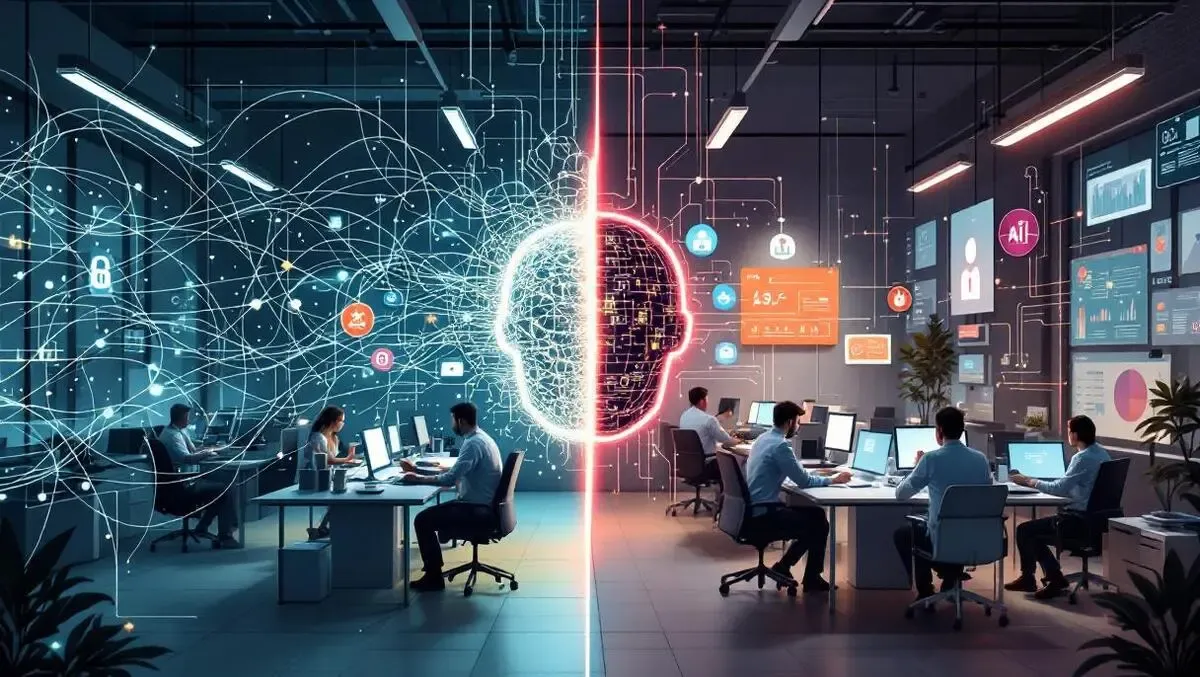
Asking “Who makes better decisions?” assumes only one side can win. In reality, the strongest companies are those that combine both.
The real comparison should be:
CEO alone vs CEO empowered by AI
And in that scenario, AI-enhanced leadership always wins.
In modern, high-performing organizations, decision-making looks like this:
AI analyzes the data
It processes market signals, customer behavior, financial performance, and risk factors.
AI provides scenarios and predictions
Instead of one answer, it presents multiple possible futures with probabilities.
The CEO interprets and decides
The CEO adds context, ethics, brand strategy, and long-term vision.
Together, they act
AI ensures accuracy and speed. The CEO ensures meaning and responsibility.
This hybrid approach produces decisions that are both intelligent and human.
Relying only on AI can be risky because:
An AI may choose the most profitable option, while a CEO may choose the most sustainable one.
At the same time, CEOs without AI face serious challenges:
In a world driven by data, intuition alone is no longer enough.
Continue exploring our insights